


Dental Health Blog | Dental Implants in Kingston
Do You Need an Implant for Every Missing Tooth? How Full-Arch Options Work
September 12, 2026 / All-on-X
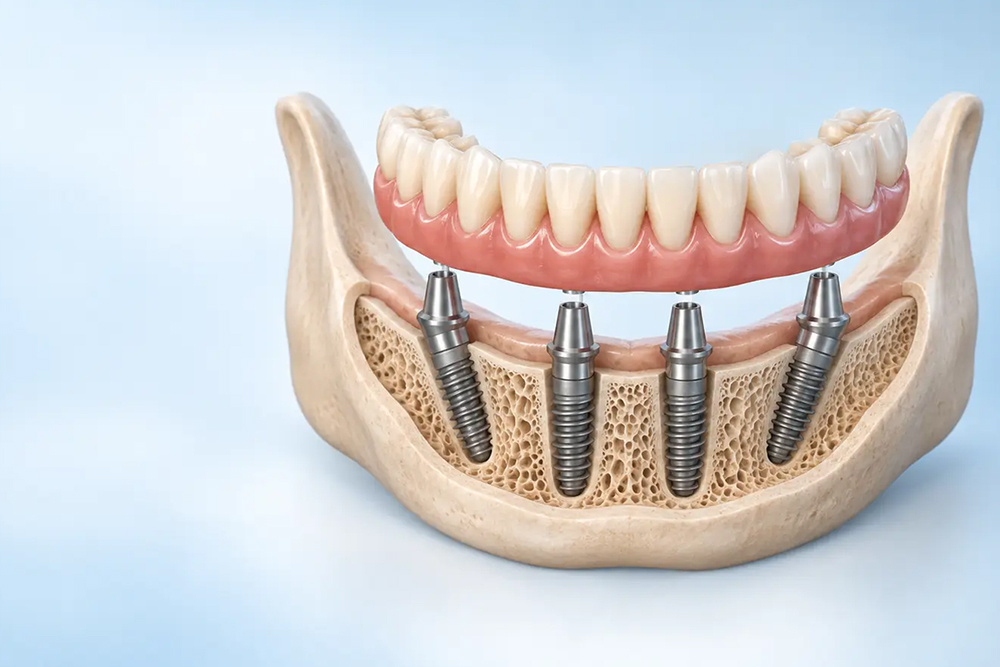
No, you do not always need one dental implant for every missing tooth. When a full-arch implant-supported option is appropriate, several strategically planned implants may support a complete row of replacement teeth. The number and placement are not a fixed formula. They depend on your oral health, bone support, bite, remaining teeth, medical history and treatment plan.
What Does All-on-X Mean?
All-on-X is a full-arch implant treatment concept in which multiple implants support a complete arch of replacement teeth. The “X” reflects that the number of implants can vary rather than describing one universal configuration.
That distinction matters. A patient researching All-on-X may see specific numbers used in treatment names, but those names should not be interpreted as a diagnosis or a promise about how many implants their own treatment would require. Full-arch planning is individualized.
Why Doesn’t Every Missing Tooth Always Need Its Own Implant?
A single missing tooth and a full arch of missing teeth involve different restorative goals. A single-tooth implant is planned to support an individual replacement tooth. With a full-arch restoration, multiple implants can be positioned to support a connected set of replacement teeth across the arch.
A simple way to think about it is the difference between replacing separate units and supporting one larger restoration. That does not mean fewer implants are automatically better, nor does it mean the same number works for everyone. The design has to provide appropriate support for the specific patient and restoration.
How Do Full-Arch Implant Options Work?
At a high level, dental implants placed in the jaw provide support for a full set of replacement teeth. The restoration is designed as a full arch rather than as a collection of unrelated single-tooth replacements.
The details can vary considerably. Treatment planning may consider the condition of the upper or lower arch, existing teeth, available bone, gum health, bite forces and the type of restoration being considered. These factors are why an online description of All-on-X cannot tell you exactly what your own treatment would involve.
Dental Implants in Kingston provides information about Teeth-In-A-Day treatment. This may be part of a full-arch treatment conversation for some patients, but the name should not be taken to mean that every person qualifies for the same sequence or timeline.
How Is This Different From Single Dental Implants or Traditional Dentures?
The main differences involve what the treatment is intended to replace and how the replacement teeth receive support.
A single dental implant generally addresses an individual missing tooth. A full-arch implant-supported restoration is designed to replace a complete row of teeth using multiple implants for support. Traditional removable dentures replace missing teeth without relying on dental implants for anchorage.
Each approach has its own planning, maintenance and clinical considerations. The relevant question is not which option is universally best. It is which options are appropriate for your oral condition, goals and overall health after an assessment.
What Determines the Number of Implants Needed?
The number of implants for a full-arch plan is determined clinically, not by counting missing teeth. Factors a dentist may need to assess include:
- Available bone support and anatomy
- Gum and overall oral health
- Your bite and how forces are distributed
- Remaining natural teeth and their condition
- Relevant medical history and medications
- The arch being treated
- The proposed type of replacement teeth
- Your treatment goals and expectations
- Long-term cleaning and maintenance needs
This assessment helps the dental team determine whether implant treatment is suitable and, if so, how the restoration could be planned. It also provides an opportunity to discuss alternatives if a full-arch implant approach is not appropriate.
What Should You Ask Before Choosing a Full-Arch Treatment Plan?
Good treatment planning should leave you with a clear understanding of what is being proposed and why.
Questions to ask include:
- Why are you recommending this number and placement of implants for me?
- What alternatives should I consider?
- What treatment stages are expected?
- Would temporary and final replacement teeth be different?
- What risks or limitations apply to my situation?
- What would daily cleaning and maintenance involve?
- What follow-up care is expected?
- How could my remaining natural teeth affect the plan?
- What happens if an implant or restoration develops a problem later?
If you hear terms such as All-on-X, All-on-4 or Teeth-In-A-Day, ask the dentist to explain exactly what that term means in the proposed plan. Similar-sounding labels do not necessarily describe identical treatment.
FAQs About All-on-X and Full-Arch Dental Implants
Is All-on-X the same as All-on-4?
Not exactly. All-on-X describes a full-arch concept in which the number of implants can vary, while All-on-4 refers to a specific number in the treatment name. The appropriate configuration depends on individual assessment and planning.
Can All-on-X replace all teeth on the top or bottom arch?
All-on-X is associated with full-arch tooth replacement, but whether it is appropriate for a particular upper or lower arch requires a clinical assessment. The dentist must evaluate the mouth, bone support, oral health and other treatment factors.
Is Teeth-In-A-Day the same as a full-arch implant treatment?
The terms can overlap in some treatment discussions, but they should not automatically be treated as interchangeable. Teeth-In-A-Day refers to a treatment concept and timing approach, while full-arch implant treatment describes the broader goal of replacing an arch of teeth with implant support. Individual suitability and timing vary.
How does a dentist decide how many implants are needed?
The decision is based on clinical assessment and treatment planning. Bone support, oral health, bite, anatomy, remaining teeth, medical history and the planned restoration can all affect the recommendation.
Can full-arch implants be discussed if I still have some natural teeth?
Yes, you can ask about full-arch options even if some natural teeth remain. The condition and prognosis of those teeth would need to be evaluated before a dentist could recommend removing, retaining or planning treatment around them.
Talk to Dental Implants in Kingston About Full-Arch Implant Options
If you are missing several teeth or researching a full-arch solution, you do not need to determine the number of implants on your own. An assessment can clarify which tooth replacement approaches are relevant and what factors would shape an individualized plan.
Learn more about dental implants in Kingston, or book a consultation.