



Dental Health Blog | Dental Implants in Kingston
Can Dental Implants Help If Your Dentures Keep Slipping?
September 20, 2026 / Dental Implants
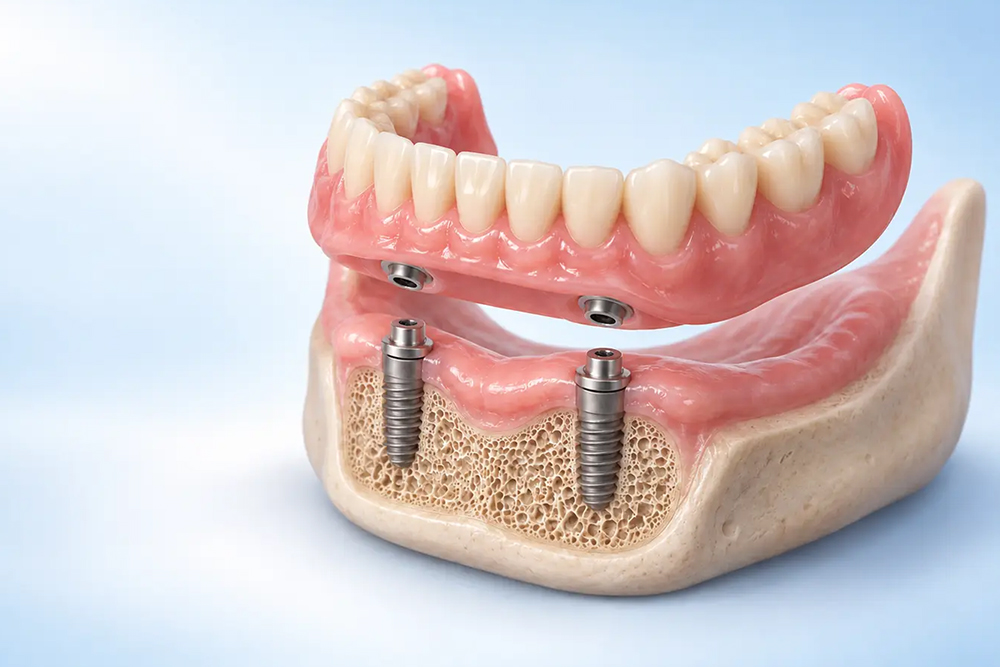
Dental implants may help support a more stable tooth replacement option for some people whose dentures keep slipping. They are not automatically the right choice for everyone, though. The cause of the looseness, your oral health, bone support, remaining teeth, medical history and treatment goals all matter. A dental implant assessment can help clarify why your dentures feel unstable and whether implant-supported teeth or another approach may fit your needs.
Why Do Dentures Start Slipping?
Dentures that once felt comfortable can become looser over time. The fit may change as the tissues in your mouth change, the denture itself wears, or your oral health changes. A loose denture does not tell you exactly what is happening, so persistent movement is worth having assessed rather than trying to diagnose the cause yourself.
Common reasons a denture may feel less secure include changes in the shape of the gums or jaw over time, normal wear, changes involving remaining natural teeth, irritation in the mouth, or a denture that may need professional adjustment, repair or replacement.
If a denture suddenly becomes uncomfortable, creates sore spots or moves much more than it used to, a dental examination can help determine what has changed.
When Are Slipping Dentures a Reason to Ask About Dental Implants?
Frequent slipping is a reasonable reason to ask about your tooth replacement options, especially when it interferes with eating, speaking or day-to-day comfort. It does not necessarily mean that you need implants.
For some denture wearers, the bigger issue is not simply that the denture moves. They may also be dealing with recurring sore areas, difficulty chewing certain foods or feeling self-conscious about the denture shifting while they talk. Those concerns can be useful starting points for a conversation about dental implants in Kingston and other ways of replacing or supporting missing teeth.
The goal of an assessment is to understand the problem first. From there, the dentist can explain which options are relevant to your situation and which are not.
How Can Dental Implants Help Support Replacement Teeth?
A dental implant is placed in the jaw and can act as an anchor for a replacement tooth or a larger dental restoration. When implants are used to support replacement teeth, the restoration receives support from those implant anchors rather than relying only on the gums for stability.
That basic difference is why implants may be part of the conversation for someone who is frustrated with a removable denture that moves. The exact design of an implant-supported restoration varies. The number and placement of implants, the type of replacement teeth and the overall treatment plan have to be determined individually.
Implants also involve treatment considerations that traditional removable dentures do not. Oral health, available bone, medical history, healing, maintenance and long-term care all need to be discussed before deciding whether an implant-supported option makes sense.
What Implant-Supported Options Might Be Discussed?
There is more than one way implants can be used when several or all teeth are missing. Depending on the assessment, a discussion might include implant-supported dentures, full-arch replacement teeth, Teeth-In-A-Day treatment or another treatment plan.
These terms are not interchangeable, and seeing one online does not mean it applies to your mouth. A full-arch approach is designed around replacing an entire arch of teeth, while another implant-supported option may have a different purpose or design. Teeth-In-A-Day also should not be read as a promise that every patient can receive the same treatment on the same timeline.
A useful consultation should make the differences clear in plain language. You should understand what would be supported by implants, what treatment stages may be involved and what ongoing maintenance would be expected.
What Should a Dental Implant Assessment Clarify?
An implant assessment should connect the treatment discussion to your actual mouth and health history. It may include evaluation of your current denture and how it fits, the health of your gums and other oral tissues, bone support, remaining natural teeth, your bite, relevant medical history and medications, your goals and the maintenance needs of a proposed restoration.
This is also the time to be specific about what bothers you. Details such as when the denture moves, whether chewing is difficult, where soreness occurs and how long the problem has been happening can give the dental team a clearer picture.
What Questions Should You Ask If Your Dentures Keep Slipping?
Consider asking:
- What may be causing my dentures to feel loose?
- Can my current denture be adjusted, or should I consider other options?
- Are implant-supported replacement teeth relevant to my situation?
- What would implants change about stability, comfort and daily maintenance?
- What factors could limit my treatment options?
- What treatment stages could be involved?
- What risks and limitations should I understand?
- How would I clean and maintain the final restoration?
- What follow-up care would be needed?
The answers should be specific to the proposed plan rather than framed as guarantees. If something is unclear, ask the dentist to explain the alternatives and why one approach is being discussed for you.
FAQs About Dental Implants and Slipping Dentures
Can dental implants stop dentures from slipping?
Dental implants may provide anchors for a more stable implant-supported tooth replacement option, but the result depends on the treatment design and the individual patient. An assessment is needed to determine whether implants are appropriate and what type of restoration could be considered.
Are implant-supported dentures the same as Teeth-In-A-Day?
No. Implant-supported dentures and Teeth-In-A-Day are related to implant dentistry, but the terms do not describe exactly the same treatment in every case. Your dentist can explain what type of replacement teeth and treatment sequence a specific plan involves.
Can I ask about implants if I already wear full dentures?
Yes. Wearing full dentures does not prevent you from asking whether implant-supported options are worth considering. Your oral health, bone support, medical history and other clinical factors still need to be assessed before candidacy or a treatment plan can be discussed.
What if I have been wearing dentures for many years?
You can still ask for an assessment. The length of time you have worn dentures is only one part of the picture, and the dentist will need to evaluate your current oral condition before discussing suitable options.
Do loose dentures always mean I need implants?
No. Dentures can feel loose for different reasons, and implants are not the only possible response. A dental examination can help identify why the fit has changed and what options are reasonable to consider.
Talk to Dental Implants in Kingston About Denture Stability
If your dentures are moving, uncomfortable or making everyday activities harder, you do not have to decide on a treatment before seeking advice. Dental Implants in Kingston can assess your current situation and discuss implant-supported and other tooth replacement options that may be relevant.